Indie Games







About Indie Games
Indie Games are made by small teams or single developers who try ideas that larger studios rarely risk. This category gathers those projects in one place: strange premises, unusual controls, short stories with several endings and mechanics you will not find anywhere else in the catalog.
What Counts as Indie on This Site
There is no strict rule about budget or team size, but Indie Games share a few traits. They usually focus on one central idea and build everything around it. The visual style is often simple or stylized, because the team spends its effort on the core mechanic instead of on realistic graphics. Many of them are short enough to finish in one evening, which makes them easy to try without commitment.
Some are polished releases, others are playtests or early versions that are still being updated. Both kinds appear here, and the description on each page explains what stage a project is in, so you know whether to expect rough edges.
One Idea, Built All the Way Through
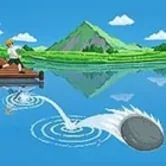
The strongest independent projects take a single concept seriously. A Weird Game About Sausage uses only one mouse button, and the whole challenge comes from how a floppy sausage lands. Spaghetti Celesti: Devour the Heavens takes the falling-block formula and replaces line clearing with growing a strand of pasta. RippleLoop turns skipping stones on a lake into an incremental loop.
None of these ideas would work as a side feature in a bigger title. They work because the entire design serves one idea, and that focus is what many players love about Indie Games.
Stories You Will Not Find Elsewhere
Narrative experiments are a big part of Indie Games. Small teams can write about topics and characters that large studios avoid, and they often play with the format itself.
- Print I Love U starts with a second-hand laptop and a program written for someone named Alice.
- ERROR143 mixes a rivals-to-lovers story with hangman-style hacking puzzles.
- Needy Girl Overdose turns a streaming routine into a story about pressure and mental health.
- Neet And Angel follows a quiet apartment routine that slowly changes after an unusual visitor arrives.
Most of these offer multiple endings, so a second playthrough with different choices often reveals parts of the story you missed the first time.
Experimental Horror and Mods
A large share of Indie Games fall into horror, because the genre works well with limited resources: a single location, good sound and a strong premise are enough. POOL LOOP builds tension from one repeating room. That's Not My Mom! uses one doorway and one question. Save The Shapes Chapter 2: Diamond's Revenge turns colorful shapes into mascot horror.
Fan mods also appear in this category. Kaizo Knight rebuilds a famous boss fight for experienced players, and Odio el chocolate reworks a well-known school escape with a new goal. Mods show how communities take familiar titles and push them in new directions.
How to Pick Your Next Indie Title
Because Indie Games vary so much, it helps to decide what kind of session you want before choosing one.
- Short and relaxing: look for incremental or puzzle projects with quick loops.
- Story-driven evening: choose a visual novel with multiple endings.
- Something unsettling: pick an observation or analog-style horror title.
- A real challenge: try a difficulty mod or a precision platformer.
Reading the first paragraph of each description is usually enough to know whether the premise will click for you. If it sounds odd, that is often a good sign in this category.
Art Styles That Stand Out
Without large art departments, independent developers lean on style instead of detail. Pixel art, hand-drawn characters, flat colors and deliberately low-poly 3D are common choices, and each of them gives a title its own identity. A stylized look also ages better than an attempt at realism, which is why many Indie Games still look good years after release.
Music works the same way. A short soundtrack with a few memorable themes often stays with players longer than hours of background audio, and some visual novels in this section are remembered mostly for their songs.
Rough Edges and Honest Expectations
Small teams behind Indie Games cannot test every situation, so occasional bugs, short running time or unfinished features are part of the territory. Playtests may change after updates, and a project you enjoyed last month might feel different now. Most players accept this trade, because the reward is originality.
Feedback matters more here than in big releases, and it is one of the reasons Indie Games improve so quickly between versions. Developers of independent titles often read comments and adjust their work, so the people who play early versions help shape what the final product becomes.
Where Indie Games Fit in the Catalog
Indie Games overlap with almost every other section. An independent title can be horror, puzzle, strategy or idle at the same time, so you will see many of these projects in other lists too. Use this page when you specifically want something unusual, then explore related genres from the menu on Gamezento.
New Indie Games are added regularly as the catalog grows, and many of the most memorable discoveries come from names nobody recognized before trying them. Open a title you have never heard of and give it ten minutes; that is how most favorites in this category are found.