Horror Games






About Horror Games
Horror Games put you in places you would normally walk away from: an empty house at night, a store with the lights off, a swimming pool that repeats itself. This section of the catalog collects titles built around fear, tension and the quiet moment before something goes wrong, and every one of them runs directly in your browser window.
What Makes a Title Belong in Horror Games
Fear in a video game comes from a mix of three things: what you can see, what you can hear and what you cannot control. Horror Games usually take away one of these on purpose. Lighting is reduced so corners stay hidden, sound becomes the main source of information, and the player character is weaker than whatever is hunting them. When those pieces line up, even a simple room starts to feel hostile.
Not every title in Horror Games relies on monsters. Some build dread through routine and rules, where breaking a rule has consequences you only discover later. Others use a familiar face or object and slowly make it wrong. The common thread is that the player is uncomfortable and has to keep moving forward anyway.
Subgenres You Will Find Here
The Horror Games label covers several styles that play very differently. Knowing which one you prefer makes it easier to pick your next session.
- Hide-and-escape: you search a building for keys and tools while a pursuer reacts to noise, as in Granny Remake and Granny 2 Reworked.
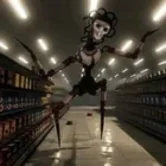
- Observation and anomaly spotting: you memorize a space and report changes, which is the core of POOL LOOP and That's Not My Mom!.
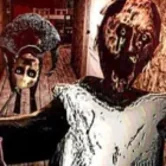
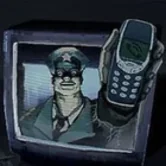
- Analog horror: distorted footage, old TV aesthetics and children's media turned eerie, seen in The Cat in the Hat - Analog Horror and Plushy's Playground: Into the Slide.
- Co-op survival: groups share the fear and split tasks, like the night shopping trips in Aisles of the Locust.
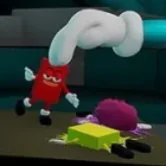
- Mascot horror: bright characters with an unsettling side, such as Save The Shapes Chapter 2: Diamond's Revenge.
Each style asks for a different skill. Escape titles reward planning routes, observation titles reward memory, and analog horror rewards patience with slow storytelling.
How Sound Shapes Every Session
If you only change one setting before starting a scary title, turn the volume up or put on headphones. In many Horror Games, sound is a mechanic rather than decoration. Footsteps tell you where a pursuer is, a creak on the stairs warns you to hide, and a change in background hum can be the only sign that a room is different from the last loop.
Developers also use silence. Long stretches with no music make the next noise feel much louder, which is why some of the most memorable scares in this category come after a minute of nothing happening at all.
Tips for Players Who Scare Easily
Being frightened is the point of Horror Games, but it should stay fun. A few habits help nervous players enjoy the genre without quitting after the first jump scare.
- Start with observation or puzzle-based titles, which have fewer chases.
- Play with the lights on and the volume at a comfortable level.
- Take short sessions; most escape titles save progress by day or by loop.
- Try co-op horror with friends, where shared panic quickly turns into laughter.
Players who enjoy the adrenaline can move on to chase-heavy titles later, once they know how the genre usually builds tension.
Strategy Behind Surviving the Night
Many people treat Horror Games as pure reflex tests, yet most of them reward thinking ahead. In escape titles, the first in-game day is best spent scouting rather than grabbing items. In anomaly titles, the early loops teach what normal looks like, so rushing through them makes later loops much harder. In co-op titles, assigning roles before entering a dark area prevents the whole group from running into the same trap.
Noise management deserves its own mention. Dropping an item, running on a wooden floor or bumping a cart into a shelf can pull a pursuer straight to you. Some experienced players use this on purpose, making a sound in one room to lure the threat away from the room they actually want to search.
Age Ratings and Choosing the Right Intensity
Intensity varies widely across Horror Games. Some titles rely on mood and mystery and are suitable for teenagers, while others include graphic imagery or adult themes. Each game page includes a description that explains what to expect, and it is worth reading before starting, especially if younger players share the device.
If you are browsing the full catalog on Gamezento, you can combine this section with others: horror plus puzzle gives slow-burn mysteries, horror plus multiplayer gives chaotic group sessions, and horror plus indie leads to small experimental projects that often surprise more than big productions.
Why Players Keep Coming Back to Horror Games
Fear is a strong emotion, and getting through a frightening situation safely creates a real sense of relief. That cycle of tension and release is why so many players return to Horror Games even after promising themselves one session was enough. Short loops, multiple endings and changing item locations also give the genre good replay value.
New titles are added to this section as the catalog grows, so the mix of escape, observation and story-driven horror will keep expanding. Pick a building, check the exits and see how long you last before the lights go out.