Simulation Games








About Simulation Games
Simulation Games let you step into a role and run it from the inside: fly a cargo plane, manage a tea stall, coach a nervous driver or look after a growing family. The fun comes from systems that behave in believable ways and respond to your decisions. This category gathers titles where you learn how something works and then try to do it well.
What Simulation Games Have in Common
Every title in Simulation Games models some part of the world, real or imagined, with rules you can learn. A plane needs speed to take off, a stall needs stock before a train arrives, a planet needs the right distance from its star to stay warm. The model does not have to be perfectly realistic; it has to be consistent, so that your choices lead to results you can understand and improve.
That consistency is what makes the genre satisfying. When something goes wrong, you can usually trace it back to a decision and do better on the next attempt.
Kinds of Simulations in the Catalog
The current collection spans several directions.
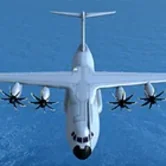
- Vehicles: Turboprop Flight Simulator puts you in the cockpit of cargo and military aircraft.
- Physics sandboxes: Universe Sandbox 2 lets you move planets, collide stars and change climates.
- Business and work: Railway Chai Wala and Don't Pick Up turn a tea stall and a repair bench into daily routines.
- Life and school: High School Simulator and Summertime Saga 2 focus on schedules, relationships and reputation.
- Management with pressure: Family Time asks you to shelter and feed a pack of wolf children that grows every night.
Each type rewards a different skill, from careful flying to long-term planning.
Learning the System Before Mastering It
Beginners in Simulation Games often try to do everything at once. A better approach is to focus on one mechanic at a time: learn takeoff before attempting cargo drops, learn the morning rush before buying upgrades, learn one class schedule before trying to befriend the whole school. Tutorials and early missions exist for this reason, and skipping them usually costs more time than it saves.
Watching what happens after each action is the fastest teacher. Simulation Games tend to show consequences clearly, if you pay attention.
Routine as Part of the Fun
Many Simulation Games are built around repeated cycles: a shift, a day, a train arriving, a night passing. Some players worry this will feel repetitive, but routine is what lets you notice improvement. The first day behind a counter feels chaotic, the fifth feels manageable and the tenth feels smooth because you have learned the rhythm.
Good titles in the genre also break the routine at the right moments, with a new tool, a harder customer or an unexpected event that forces you to adapt.
Planning for Growth
Management-style Simulation Games reward thinking a few steps ahead.
- Spend early income on upgrades that reduce your workload.
- Leave room for expansion when placing buildings or equipment.
- Delegate tasks to helpers as soon as the option appears.
- Keep a small reserve for unexpected problems.
In Family Time, for example, a cramped first layout becomes a serious problem once the pack doubles in size, while a spacious one makes later nights much easier.
Mistakes as Lessons
Failure in Simulation Games is rarely final. A crashed landing, an empty kettle during a rush or a missed directive at the repair bench usually costs a little progress and teaches a lot. Because the systems are consistent, each mistake points to a specific cause: approaching the runway too fast, brewing too late, skimming instructions instead of reading them. Fixing that one cause often solves a whole group of problems at once.
Some titles add consequences that carry forward, such as a reputation score in High School Simulator or a compliance review in Don't Pick Up. These make choices feel weightier and encourage you to think before acting, which is a big part of the appeal for players who enjoy role-play.
It also helps to treat early sessions as practice. Many players restart their first day or first flight once they understand the basics, and the second attempt almost always goes much more smoothly than the first.
Realism Versus Playability
No simulation copies reality completely, and the best ones choose what to simplify. A flight title may skip complex checklists so you can focus on landing, while a life sim compresses a day into a few minutes. Players sometimes debate where that line should sit: some want more depth, others want faster progress. Each description on Gamezento explains how detailed a specific title is, so you can choose the level that suits you.
Simplification is not a flaw when it keeps the focus on the decisions that matter. It becomes a problem only when the shortcuts make results feel random.
Who Will Enjoy This Category
Simulation Games suit curious players who like to understand how things work and enjoy steady improvement over quick thrills. They work well for long sessions, but many titles also break neatly into short shifts or days that fit into a lunch break. Fans of planning, building and role-play will find the most here.
The category grows as new titles join the catalog, adding more vehicles, workplaces and worlds to manage. Pick a role that sounds interesting, learn its basic rules and see how well you can run things once the pressure rises.